Research and Theory.
Methodologies, Management, Catalysts, Theories and Fictions.
Initial Thoughts
This week’s lecture focused on an area of contemporary Graphic Design that was, in part, why I had chosen to pursue an MA in Graphic Design. Through my work as an advocate for Syrian refugee support groups and their affiliates, I had come to apply my professional experience and knowledge of Design-Theory to the real-world experiences that I found myself confronted by-reflecting on how I could implement the practices and problem-solving strategies utilised by my industry, to the broader conversation around the topic of humanitarian crisis.
Among such considerations were: questions pertaining to the levels of poverty, throughout the global-community and the consequences we are forced to confront as a result, for example: The over-population of our cities, contributing to the increased levels of pollution and a growing mental health problem, within many of today’s first-world workforces.
In this endeavour, Research and Methodologies are paramount in addressing such vast and complex questions. And we are witnessing an increased awareness in Graphic Design of the relevance and necessity for such an approach, in the work of companies such as IDEO and Formafantasma-The later, adopting a research-led approach to their professional practice and in doing so, forging relationships between critical thinking, industry, cultural traditions and the experimental application of ideas.
Guest Lecture: Martin Hosken
1. Curiosity
At the beginning of this week’s Lecture, I was asked to respond to the question: How do I define research?
I would answer that question with the following response: Research is the pursuit of knowledge through inquiry-an untangling of threads, at the centre of which is to be found a truth. And it is this truth that is the catalyst for the learning of a new set of ideas.
Shorty, thereafter I am asked to spend ten minutes observing the space in which I am located.
I am sat on an adjustable, office-chair. The chair is generic in appearance, utterly forgettable in every way. The desk at which I am working is constructed from aluminium, with a surface made from a dark wood-the name of which I do not know. This desk is populated by numerous objects, that belong to my girlfriend-she likes to sculpt and there are a number of her works scattered across the surface of the work-space, there they sit unfinished.
The room is newly renovated, the clean lines and white walls concealing the history of the building. I am inhabiting a space that had once served as the offices for a large, commercial, industrial-complex, one that had once been the largest producer of agriculture equipment in the country-This room, tells the story of the Industrial Revolution in this country. I am living in an exhibit.
The area adjacent to the fridge is elevated, the reason for this structural anomaly is that this area of the room had once housed a staircase, that had led to the roof-Now concealed by white-boards and partition-walls.
To my left, there is standing a large bookshelf which is home to an eclectic array of books. Among these titles, are publications on The Art of The Dark Crystal, a book on Science-Fiction, and a recipe-book that explores Mediterranean-cooking. On the shelves next to the books there sits an array of items, these include: A hand-made card from my niece, A pair of pliers, A stoneware-pot, and a selection of Studio Ghibli figurines, that were carved by my girlfriend.
Rays of sunlight cascade from the sky-light, as a bottle of Red wine sits pensively next to the unwashed plates and cups that had been used at breakfast. The air-conditioner hums excitedly, as it surveys the room-it’s energy like that of a child preparing to embark upon a day-trip to the seaside.
2. Philosophy
The Four beliefs that underpin our philosophical categorisations:
The process of reflection
Metaphysics
Aesthetics
Ethics
3. Methodologies
Qualitative Research
Quantitive Research
Research Principles
- Minimise the risk of harm to participants
- Obtaining informed consent
- Protecting anonymity and confidentiality
- Avoiding deceptive practices
- Providing the right to withdraw
Sources
- Primary
- Secondary
Analysis
- Formal
- Contextual
Validating my sources.
What makes a good Research question?
Reliant
Manageable
Substantial
Original
Fit for assessment
Precise-provides clarity
Interesting
CRAAP-Test
The CRAAP test is an acronym for:
Currency
Reluctance
Authority
Accuracy
Purpose
This test is used by educators and students in the validating of information, specifically the sources that have been referenced during the research-process. In the application of this method, we are able to reduce the use of unreliable information.
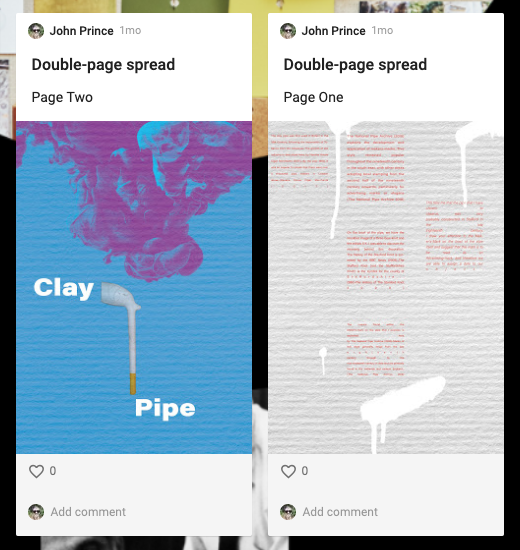
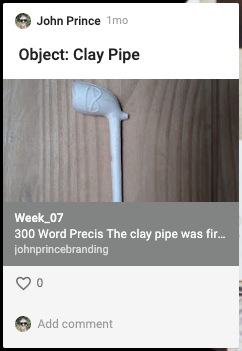
The History of the Clay Pipe
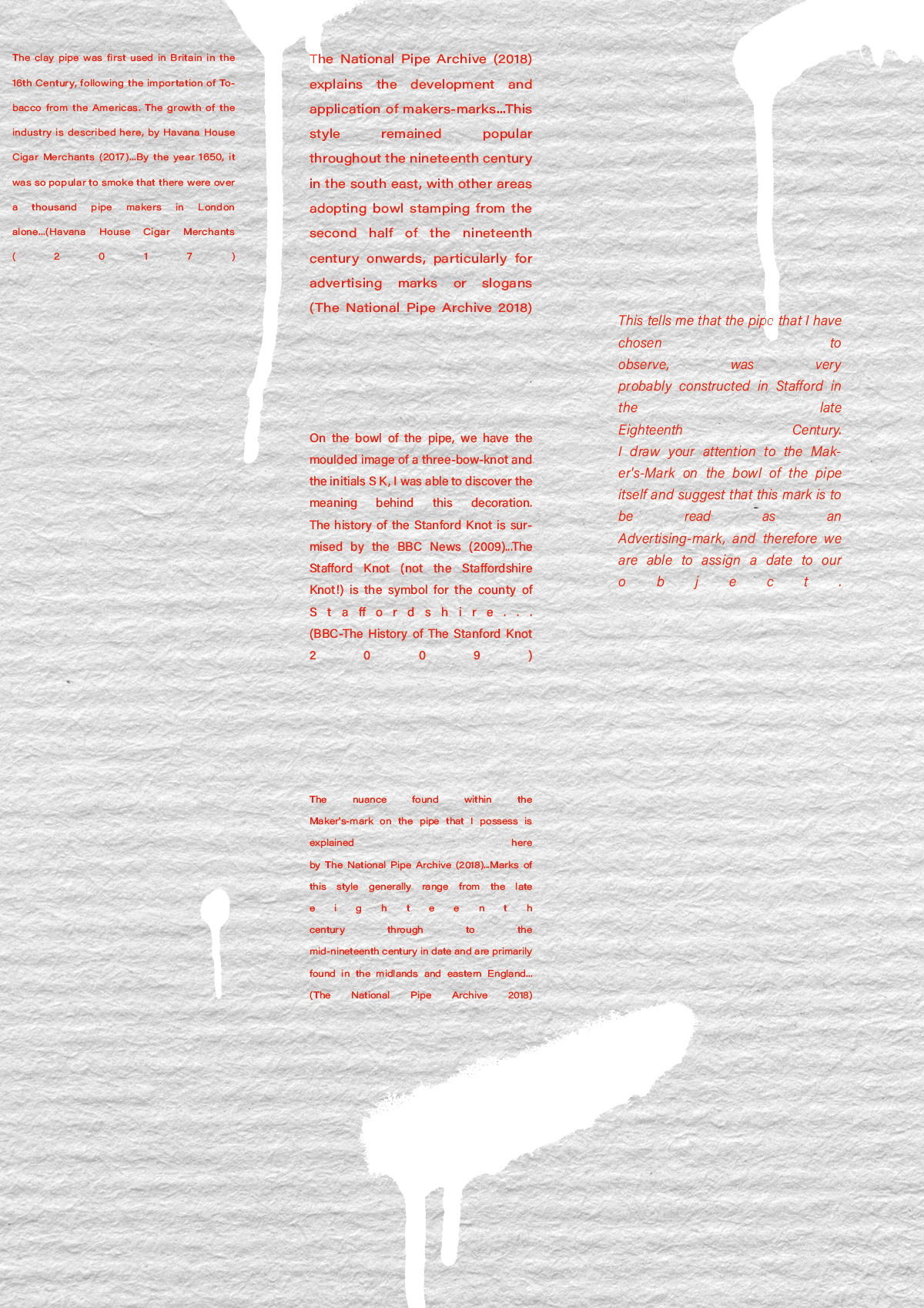
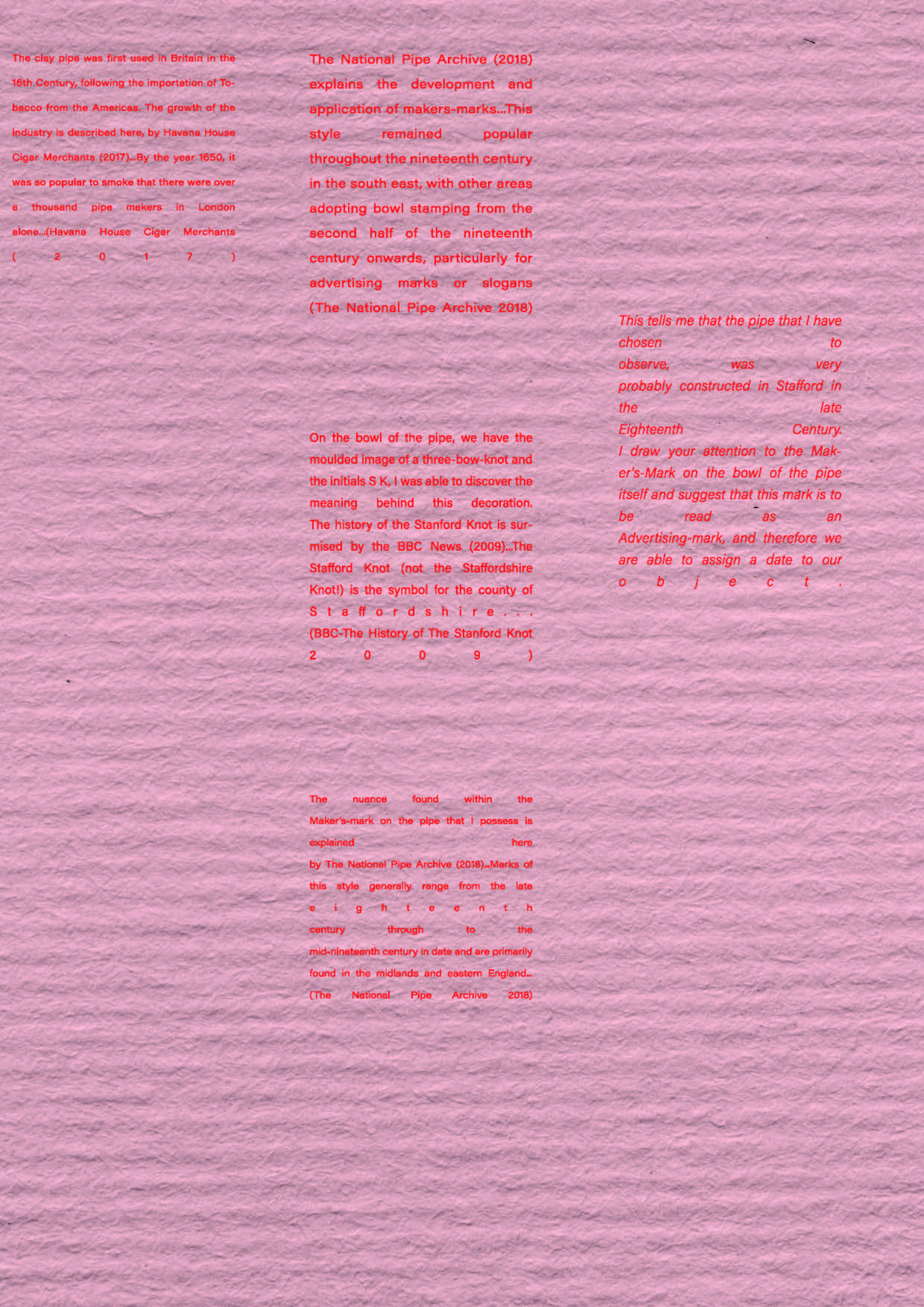
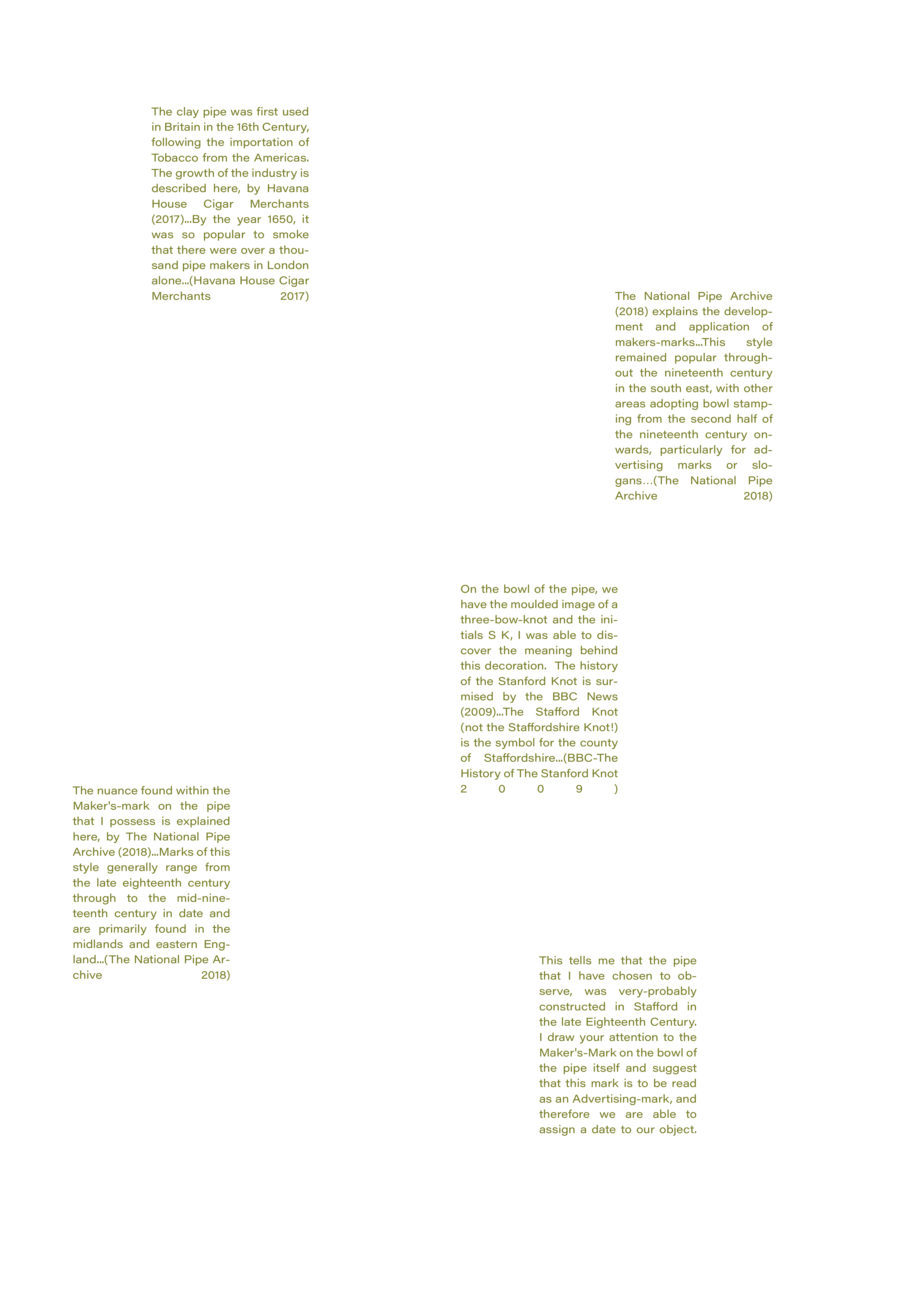
The clay pipe was first used in Britain in the 16th Century, following the importation of Tobacco from the Americas. Sir Walter Raleigh being among the first advocates for this practice, encouraged the consumption of tobacco. Following the example set by those at court, the upper-classes soon embraced pipe-smoking with enthusiasm. The growth of the industry is described here, by Havana House Cigar Merchants (2017)…By 1619, there were enough clay pipe makers in London alone to grant a charter of incorporation to the tobacco pipe makers in Westminster. This resulted in laws being set within the city regarding trading regulations, the supply of clay used, and the hiring of apprentices to ensure the trade could keep up with the growing demand. By the year 1650, it was so popular to smoke that there were over a thousand pipe makers in London alone and many others in cities across the country…(Havana House Cigar Merchants 2017)
The National Pipe Archive (2018) explains the development and application of makers-marks…In most areas marks were only occasionally stamped on bowls during the seventeenth century, the notable exception being the Rainford area of Lancashire (now Merseyside), where distinctive crescent shaped marks were widely used from about 1640 onwards, particularly on spur bowls (Higgins 2008). For much of the eighteenth century bowl stamping was very rare anywhere, although a few large marks were used in the London area. During the later eighteenth century London makers used this style more frequently, usually using large oval or circular stamps containing the maker’s name and, especially in later examples, address. This style remained popular throughout the nineteenth century in the south east, with other areas adopting bowl stamping from the second half of the nineteenth century onwards, particularly for advertising marks or slogans. Rubber stamped ink marks were also used for a similar purpose from the late nineteenth century onwards. (The National Pipe Archive 2018)
On the bowl of the pipe, we have the moulded image of a three-bow-knot and the initials S K, on further investigation into this maker’s-mark I was able to discover meaning behind this decoration. The history of the Stanford Knot is surmised by the BBC News (2009)…The Stafford Knot (not the Staffordshire Knot!) is the symbol for the county of Staffordshire. It appears everywhere from road signs and army berets to local pottery and football club crests…(BBC-The History of The Stanford Knot 2009)
The nuance found within the Maker’s-mark on the pipe that I possess is explained here, by The National Pipe Archive (2018)…Moulded rim marks usually comprise the maker’s name and place of work arranged as a band of relief lettering running around the bowl just below the rim. This usually occurs in conjunction with other moulded bowl decoration. Marks of this style generally range from the late eighteenth century through to the mid-nineteenth century in date and are primarily found in the midlands and eastern England, with occasional examples having been produced in London and the south east…(The National Pipe Archive 2018)
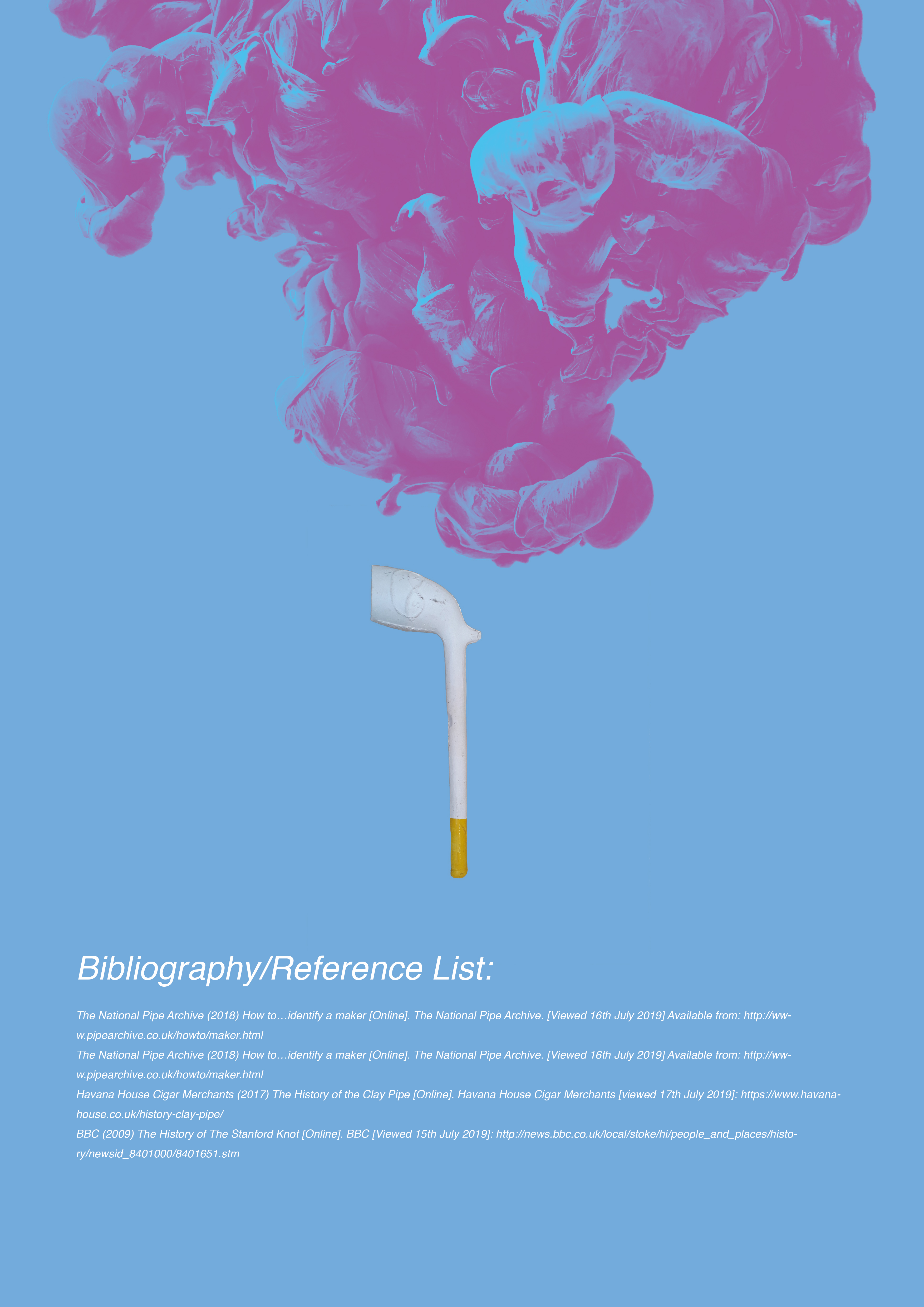
This tells me that the pipe that I have chosen to observe, was very-probably constructed in Stafford in the late Eighteenth Century. I draw your attention to the Maker’s-Mark on the bowl of the pipe itself and suggest that this mark is to be read as an Advertising-mark, the criteria for which is referenced in paragraph one, and therefore we are able to assign a date to our object, with some confidence.
Research: Editorial-Design
As an editorial designer, I view the page as an extension of the subject. The tactile nature of the page contributes to the contextualisation of the subject-matter, thereby communicating the nature of the content.
In a society that is enveloped by visual-narratives, we as designers can be daring and experimental in our execution of the story that we are telling. The average reader today, is far more competent in the deciphering of semiotics and symbols, and therefore we are able to present a far more complex visual-narration. Here we can see a selection of examples, depicting the various techniques that can be explored through experimentation and play.
Dav id CarsoN: NuCollage.

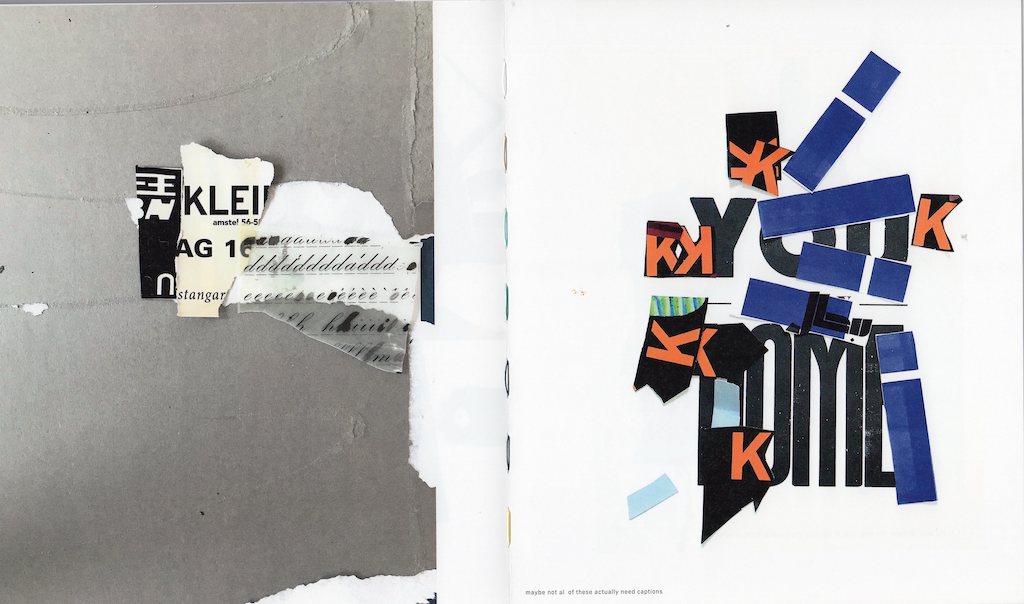
The most beautiful Swiss books.
Each year the Swiss Federal Design Association hosts a competition for the most beautiful book designed that year, an internationally acclaimed competition that plays host to some of the most talented, practitioners in the industry.
In conjunction with this competition, a book is commissioned showcasing the finest examples of that years’ entries. The books themselves have become a highly regarded, intelligent, and progressive talking-point. Each year, the international design-community wait in anticipation for the publication of that years book. Below are a selection from the Zurich and New York based, agency that had been commissioned to design the 2017 catalogue.
Hubertus Design-Zurich / New York.
Examples from the 2017, Most beautiful books catalogue.
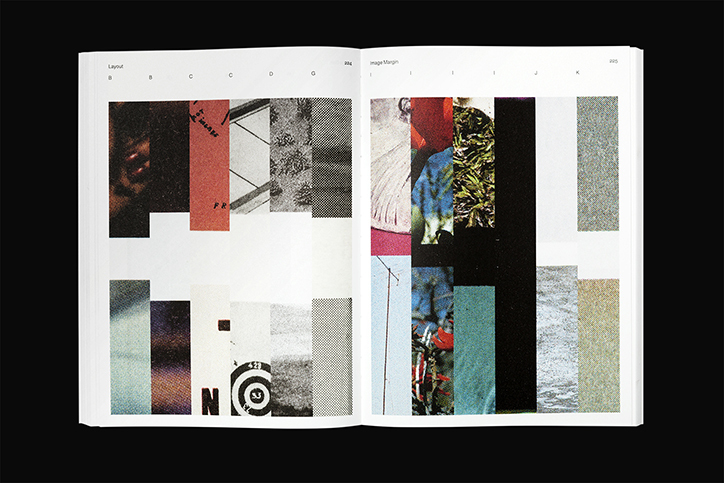
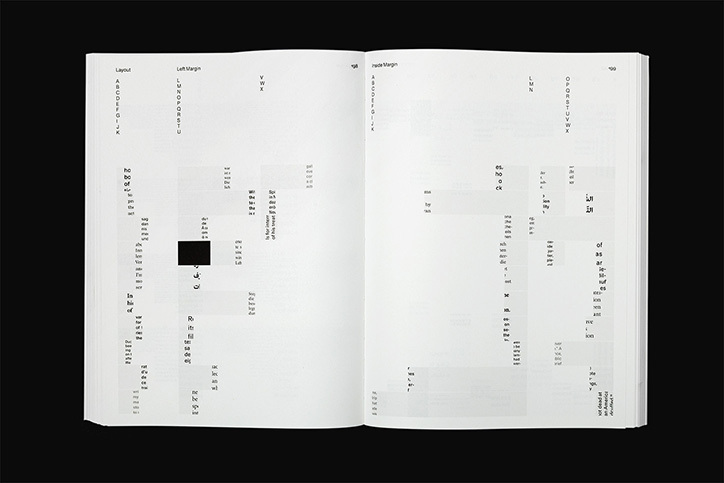
Further examples of the work produced by Hubertus Design.


Design and Development
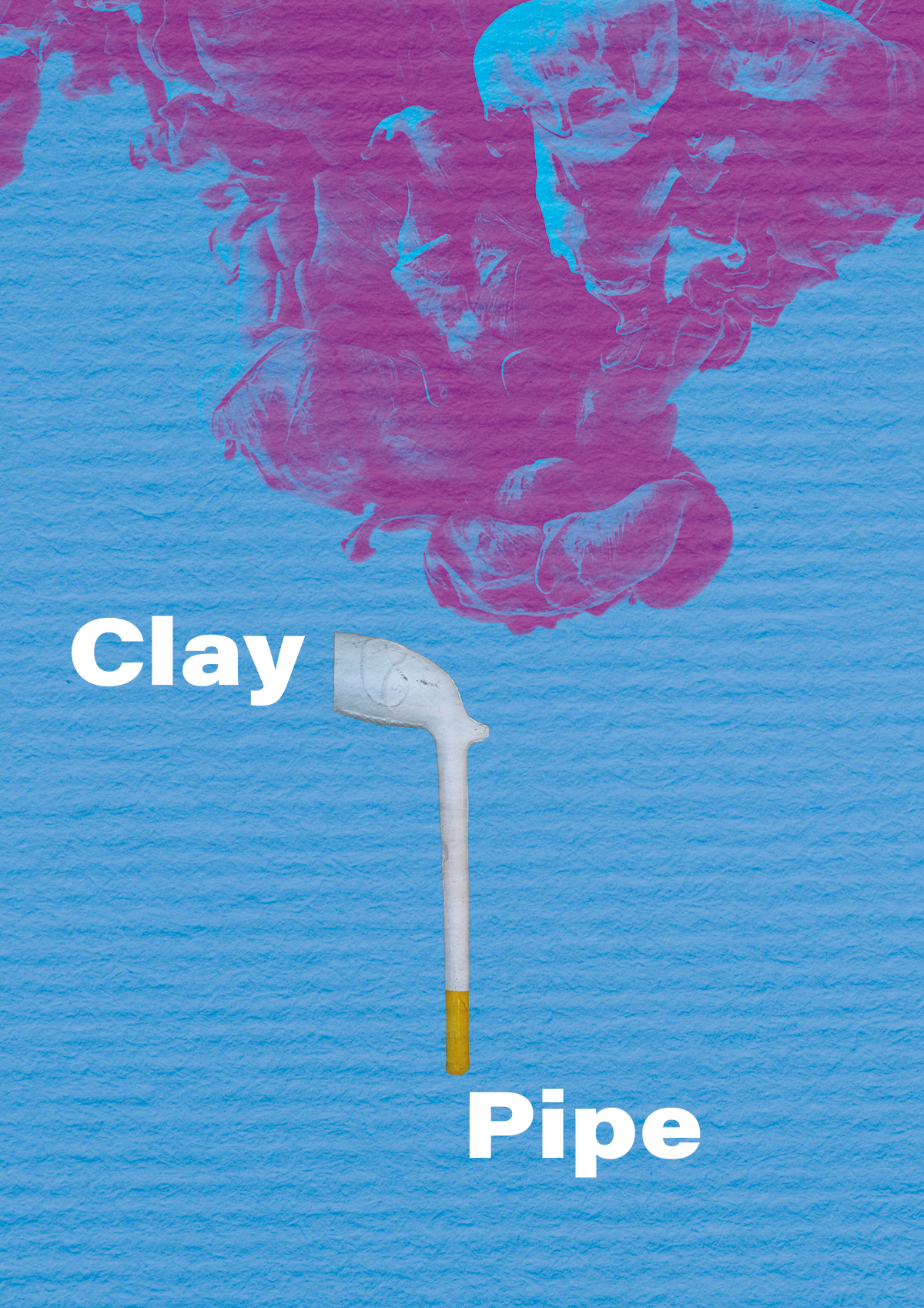
Final Piece:
Ideas-wall.
Bibliography / Reference List:
The National Pipe Archive (2018) How to…identify a maker [Online]. The National Pipe Archive. [Viewed 16th July 2019] Available from: http://www.pipearchive.co.uk/howto/maker.html
The National Pipe Archive (2018) How to…identify a maker [Online]. The National Pipe Archive. [Viewed 16th July 2019] Available from: http://www.pipearchive.co.uk/howto/maker.html
Havana House Cigar Merchants (2017) The History of the Clay Pipe [Online]. Havana House Cigar Merchants [viewed 17th July 2019]: https://www.havanahouse.co.uk/history-clay-pipe/
BBC (2009) The History of The Stanford Knot [Online]. BBC [Viewed 15th July 2019]: http://news.bbc.co.uk/local/stoke/hi/people_and_places/history/newsid_8401000/8401651.stm
 JohnPrinceBranding